




Interstellar Comet 3IATLAS
What Is Interstellar Comet 3I/ATLAS
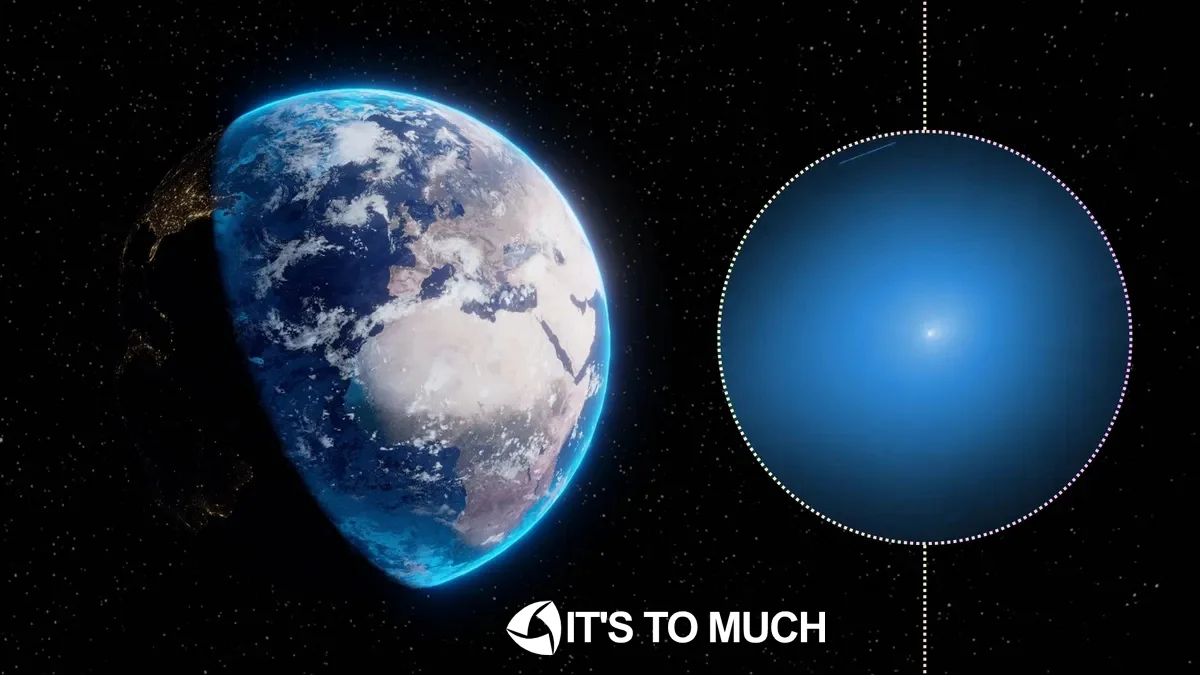
A visitor from outside our solar system is Interstellar Comet 3I/ATLAS. Using automated sky surveys, astronomers discovered its peculiar hyperbolic trajectory. These orbits show that objects are not confined to the Sun by gravity. Billions of years ago, 3I/ATLAS most likely formed around another star. Before coming across our solar neighborhood, it meandered through interstellar space. Its finding broadens human knowledge of planetary systems other than our own. As a natural sample from a different star environment, scientists examine it. There are hints concerning cosmic chemistry beyond our solar system in this comet. Every interstellar object casts doubt on presumptions on the evolution of planetary materials.
How Was 3I/ATLAS Discovered
The ATLAS survey used wide-field telescopes to examine the sky for 3I/ATLAS. The object’s strange trajectory and fast velocity caused software to flag it. Its interstellar origin and hyperbolic trajectory were verified by subsequent observations. In order to monitor its brightness and position, astronomers swiftly cooperated on a global scale. Scientists were able to collect important compositional data thanks to early discovery. This discovery demonstrates the efficacy of automated sky-monitoring networks. Improved algorithms have made it possible to locate rare objects faster than before. 3I/ATLAS validates planetary defense investments and deep-sky surveys. Future surveys may discover many more interstellar travelers.
Why Is Its Orbit So Important
Unlike most comets in the solar system, 3I/ATLAS has a highly hyperbolic orbit. With such an orbit, once it leaves the Sun’s influence, it will never come back. Its interstellar origin is confirmed by the fact that its speed is greater than the solar escape velocity. In order to trace potential stellar neighborhoods of origin, astronomers compute its route. Throughout the journey, gravitational interactions somewhat altered its original direction. Despite doubts, its orbit remains a valuable diagnostic tool. Orbital analysis distinguishes between interstellar objects and long-period comets. Knowing its velocity helps predict future interstellar detections. With every orbit, models of celestial mechanics get better.
What Is 3I/ATLAS Made Of
Spectroscopic studies show that 3I/ATLAS emits gases when it warms near the Sun. Researchers discovered compounds based on carbon that emitted a greenish coma light. Dust particles reflect sunlight, revealing grain sizes and composition. Compared to other comets in the solar system, its chemical seems to be quite different. This implies production under various radiation and temperature conditions. Astronomers compare these signatures to known comet families. Variations may reflect the conditions of several planetary systems. Chemical analysis informs theories regarding the dispersion of organic molecules. Interstellar comets may spread life-supporting materials across galaxies.
Why Does It Appear Green
Excited carbon molecules give 3I/ATLAS its green hue. The breakdown of carbon compounds by sunlight releases diatomic carbon gas. This gas fluoresces green when it receives energy from the sun. Many comets have green comas, but interstellar comas are more interesting. Both solar distance and gas production rates have an impact on brightness. Astronomers track the evolution of chemicals by measuring color changes. As molecules scatter, green emission rapidly diminishes. Physical processes close to the comet nucleus are revealed via color analysis. Comet activity models are improved by these data.
How Big Is the Comet
The surrounding gas and dust make it difficult to estimate the magnitude of 3I/ATLAS. Astronomers determine the size of the nucleus by analyzing brightness. According to current estimations, the nucleus is several hundred meters broad. Many known comets in the solar system are similar in size. However, because of reflecting dust effects, uncertainties still exist. Thermal models help constrain appropriate size ranges. Accurate sizing informs density and mass calculations. These values have an impact on activity level forecasts. Size comparisons help classify extraterrestrial objects.
Can It Be Seen From Earth
Professional telescopes are the main means of seeing 3I/ATLAS. Most observers cannot see it with the unaided eye due to its weak magnitude. Sophisticated amateur equipment could record it under cloudy skies. Visibility depends on how far away the Earth is from the Sun. Astronomers issue ephemerides to track its movements. Because of the quick speed, observation windows are short. The closest approaches generate a surge in public attention. Curiosity about interstellar visitors is sparked by images published online. These kinds of occasions link science to the public’s imagination.
Does It Pose Any Threat
There is no threat to Earth from 3I/ATLAS, according to astronomers. It stays well beyond any collision path thanks to its trajectory. Gravitational capture by Earth is prevented by interstellar speed. Planetary defense teams continue to keep a close eye on any strange objects. This monitoring enhances preparedness for real threats. For tracking systems, 3I/ATLAS offers a safe test case. Accurate orbital computations are essential to risk evaluations. The need of open communication is highlighted by public concern. Reassurance based on science increases confidence in astronomical study.
What Makes It Different From Other Comets
3I/ATLAS did not form close to our Sun, in contrast to normal comets. The conditions surrounding a different star are reflected in its materials. Exposure to interstellar radiation may change its surface chemistry. It differs from long-period comets in both velocity and trajectory. Comparisons show both significant similarities and variances. These contrasts enhance comet classification methods. Comprehending diversity improves our understanding of the creation of the globe. Every interplanetary object expands the known range of possibilities. Diversity is what drives scientific progress.
What Can It Teach About Other Star Systems
3I/ATLAS is a messenger from a distant planetary system. Its composition suggests conditions in other protoplanetary disks. Models of planetesimal formation are based on comparisons. It might be a reflection of galactic chemical abundances. Such information indirectly supports observations of exoplanets. Interstellar objects provide concrete samples, in contrast to distant exoplanets. This closes observational gaps in planetary science. Every new finding advances our knowledge of the cosmic environment. These visitors contribute to cosmic variety. Interstellar Comet 3I/ATLAS is a rare visitor originating beyond our solar system, carrying pristine material from another stellar environment.
How Do Astronomers Study It
Scientists employ imaging, photometry, and spectroscopy. Ground-based observatories and space telescopes work together. Recurring observations track changes in activity over time. Models simulate gas release and dust dynamics. Data exchange speeds up analysis between institutions. Machine learning helps identify patterns in observations. Due to the short observation windows, quick action is essential. Each dataset advances the field of comet science. Modern astronomical study is characterized by collaboration.
What Happens After It Leaves
3I/ATLAS will proceed to return to interstellar space. It will never go back to being close to the Sun. The effects of solar heating will progressively fade with distance. Scars from the solar encounter may still be visible on its surface. In the future, stars might deflect it or catch it. Its long voyage highlights cosmic timeframes. Astronomers save data for future comparison analysis. Every passing interplanetary object leaves a lasting scientific mark. Its legacy will impact discoveries for decades to come.
Conclusion
An important development in contemporary astronomy research is Interstellar Comet 3I/ATLAS. It reminds individuals of the interconnectedness of our solar system. Each interplanetary traveler has tales from distant star communities. Astronomers turn ephemeral encounters into enduring knowledge through meticulous observation. 3I/ATLAS has improved our understanding of planetary formation, cosmic chemistry, and dynamics. It enhances international collaboration between observatories and researchers.
The public’s excitement reflects a shared interest in our galactic origins. Future surveys will likely find a large number of these nomads. Every discovery will question presumptions and improve scientific frameworks. In the end, 3I/ATLAS broadens viewpoints and promotes humility toward humanity’s role in the cosmos. These findings stimulate global space science education, innovation, and sustained investment. They link research motivated by curiosity with a wider cultural embrace of knowledge and exploration.

I’m a passionate blogger with a degree in APD Computer Science, blending technical expertise with a love for sharing knowledge. Through my blog, I explore the intersections of technology, creativity, and practical insights, offering readers valuable perspectives on topics that matter. Whether it’s diving into the latest tech trends, sharing productivity hacks, or simplifying complex concepts, my goal is to inspire and inform with every post.