





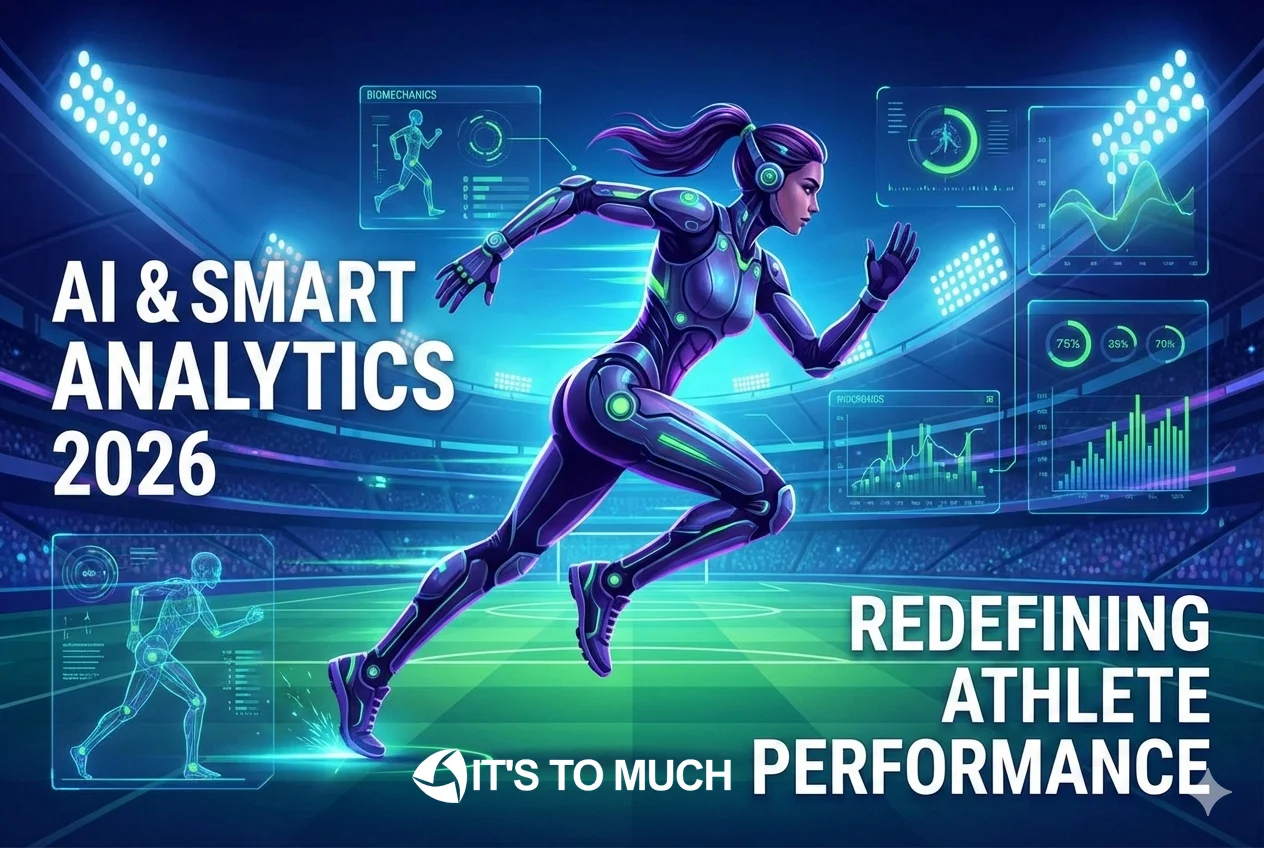
AI and Smart Analytics for Redefining Athlete
The Shift From Physical Talent to Intelligence-Driven Performance
By 2026, physical strength, speed, and endurance will no longer be the only factors determining an athlete’s performance. Rather, it is being more and more shaped by intelligence-driven technologies that accurately perceive human capabilities. Sports are becoming evidence-based performance sciences rather than intuition-based practices thanks to artificial intelligence and smart analytics. These days, athletes train in settings where each activity, heartbeat, and recovery cycle produces useful data. In order to find patterns that were previously undetectable, this data is continuously examined rather than just being gathered.
These days, AI and Smart Analytics for Redefining Athlete, systems are able to comprehend how little biomechanical inefficiencies impact long-term performance or how mental stress slightly modifies physical output. Talent identification has therefore changed as well. Coaches and companies now use predicted indications of growth, resilience, and adaptability instead of just evident athleticism. This change minimizes needless stress while enabling athletes to reach their full potential. In 2026, athletes’ ability to successfully incorporate intelligent feedback into their daily routines and transform data into disciplined action will determine their level of success. Performance is now a strategic partnership between machine intelligence and human ambition.
Smart Training Systems and Hyper-Personalized Athletic Development
In contrast to conventional standardized programs, training approaches in 2026 are drastically diverse. AI-driven training systems now produce extremely customized training regimens based on the physiology, genetics, lifestyle, and competitive objectives of every athlete. Based on hormonal changes, stress levels, sleep quality, and past session outcomes, these systems modify workloads in real time. Athletes work in dynamic training conditions that change every day rather than adhering to set regimens. In order to avoid overtraining and guarantee steady advancement, intelligent analytics determine the ideal intensity levels.
By eliminating uncertainty from preparation, this customization helps both young athletes and elite professionals. AI also takes long-term development into consideration, striking a balance between career longevity and short-term performance increases. Coaches can develop more inclusive and successful coaching tactics by learning more about how athletes react differently to similar stimuli. To lessen team tiredness, training loads are distributed among squads in team sports. By 2026, training will be about doing exactly what is right for each person at the right time, not about doing more.
Injury Prevention and Predictive Health Monitoring
The prevention of injuries is one of AI’s most significant achievements in 2026. These days, smart analytics tools identify harm hazards weeks before physical symptoms manifest. AI detects minor warning indicators that humans frequently overlook by examining movement asymmetries, muscle activation patterns, and tiredness markers. During training and competition, wearable sensors monitor joint stress, impact forces, and recovery effectiveness. Predictive models that calculate the likelihood of injury under particular circumstances are fed this data.
These insights are used by medical teams to adjust workloads, provide corrective exercises, or mandate deliberate rest intervals. With AI-guided recovery systems that adjust to healing progress, rehabilitation has also become more effective. Athletes are more confident and have a lower chance of reinjury when they return to competition. Significantly, proactive protection replaces reactive treatment in sports medicine because to this technology. By 2026, maintaining athlete health will be a deliberate procedure backed by ongoing, intelligent monitoring rather than a matter of chance.
Cognitive Analytics and the Rise of Mental Performance Optimization
As AI progressively takes into account cognitive and emotional aspects, athlete success in 2026 goes much beyond physical metrics. Focus, reaction time, decision-making speed, and emotional control are all now assessed by smart analytics. Cognitive wearables and neurofeedback devices track brain activity during practice and competition. Athletes can better understand how fear, confidence, or exhaustion affect performance by using AI systems to correlate mental states with performance outcomes. This realization enables customized mental training programs based on each person’s unique psychological profile.
These days, focus exercises, stress management practices, and visualization strategies are data-driven rather than generalized. By gaining insight into cognitive preparedness, coaches can make more intelligent tactical choices. Instead of being an abstract concept, mental performance is now regarded as a measurable, trainable skill. Under duress, athletes with cognitive analytics exhibit greater consistency and resilience. By 2026, mastering the mind will be just as important as conquering the body, altering the definition of true preparedness.
Game Strategy, Decision Intelligence, and Competitive Advantage
Athletes and teams now approach competition in a completely different way thanks to AI and smart analytics. In 2026, sophisticated decision intelligence systems that examine adversaries, surroundings, and past trends will be the driving force behind strategic planning. AI algorithms assist athletes predict potential results and the best course of action by simulating thousands of competition scenarios. During games, real-time analytics offer practical insights that guide tactical changes without overwhelming players. Simplified, context-aware instruction is given to individual players, improving their ability to make decisions under duress.
AI aids players in controlling situational risk, energy allocation, and pace in specific sports. Strategies in team sports change dynamically in response to opponent actions and game momentum. By reducing dependence on instinct alone, this intelligence-driven strategy produces more consistent performance. Crucially, AI improves human creativity by relieving athletes of cognitive fatigue rather than replacing it. In 2026, excellent information interpretation and application will be more important for competitive advantage than secrecy.
Democratization of High-Performance Tools and Ethical Challenges
Even though AI has improved top performance, accessibility will be one of its biggest effects in 2026. Rich companies are no longer the only ones using advanced performance analytics. Athletes from impoverished nations can use simple gadgets to access top-notch insights thanks to cloud-based technologies. This democratization promotes more equitable competition and aids in the global identification of talent. But it also presents moral dilemmas. Algorithmic bias, data ownership, and privacy are now major issues.
Athletes need to have faith that their biometric information is secure and handled responsibly. In order to guarantee justice and transparency, governing bodies now control AI applications. Over-reliance on technology against human autonomy is another topic of continuous discussion. In 2026, upholding sport’s integrity while welcoming innovation will be a challenge. When applied properly, AI improves opportunities rather than fostering inequity. Athlete performance in the future hinges on striking a balance between technological advancement, moral responsibility, and human values.
Conclusion: Redefining Human Potential Through Intelligent Collaboration
In 2026, artificial intelligence (AI) and intelligent analytics will not replace athletes; rather, they will redefine their potential. These days, intelligent cooperation between human effort and computer insight results in performance excellence. Because judgments are based on facts rather than conjecture, athletes train more intelligently, compete safely, and recuperate more quickly. While intelligence-driven adaptation determines duration and consistency, physical ability is still crucial. Athletes who are able to analyze feedback, believe evidence, and stay flexible will be the most successful as technology develops. Sport’s future is not just technology; it is deeply human and enhanced by intelligence. Athlete performance enters a new era where perception no longer limits potential but comprehension expands it by accepting AI responsibly.