




AI-Guided Laboratory Automation
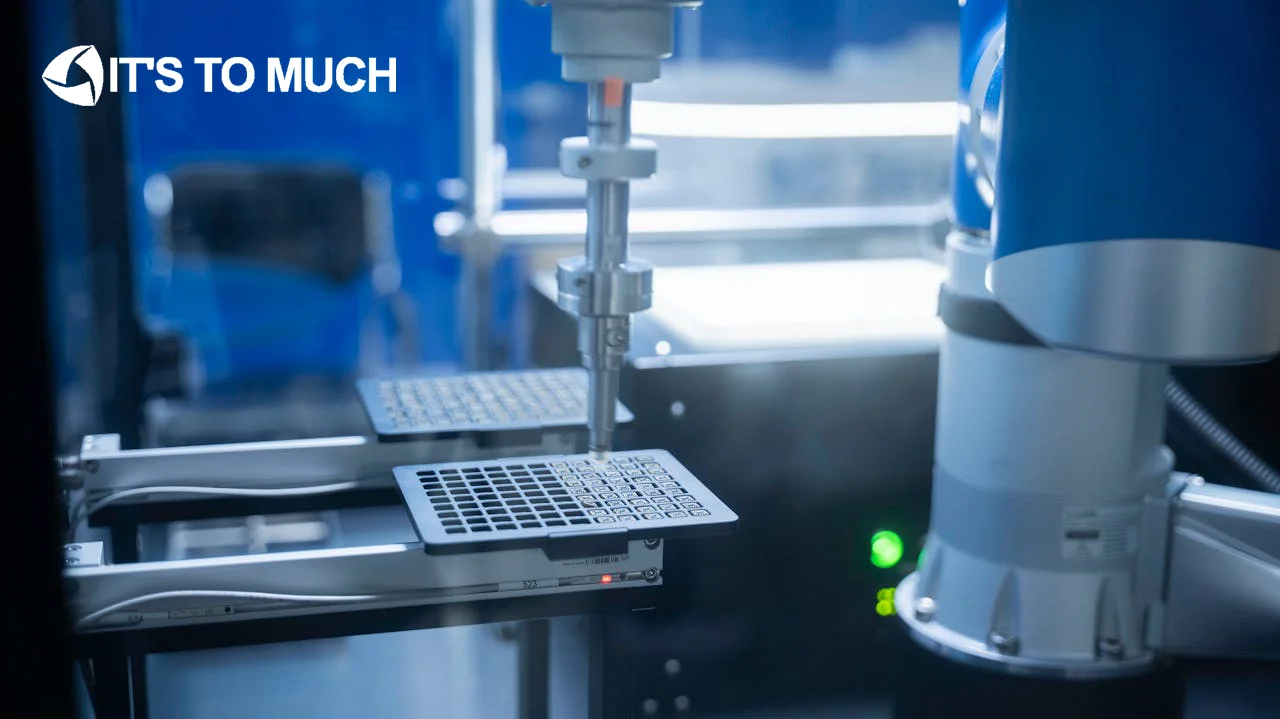
The way scientists plan, carry out, and evaluate experiments is changing thanks to AI-guided laboratory automation. These days, researchers employ sophisticated algorithms to precisely handle repetitious jobs. These devices actively lower human error in a variety of challenging lab settings. Robotics, machine learning, and real-time analytics are all smoothly integrated by automated platforms. Without compromising the quality or repeatability of the data, scientists can expedite their experimental cycles. Based on the best use of available resources, AI systems actively plan experiments. They use incoming experimental data to continuously modify parameters. This flexibility greatly speeds up hypothesis testing. These days, laboratories can manage higher experiment quantities with reliable precision.
AI-driven automation facilitates interdisciplinary research in materials science, biology, and chemistry. Researchers actively change their emphasis to analytical and creative thinking. Pipetting, sample preparation, and equipment calibration are all effectively handled by automation. AI-powered monitoring systems quickly identify abnormalities during experimental runs. These findings stop expensive experiment failures and data loss. Researchers actively rely on outcomes generated in automated, controlled environments. Additionally, automation solutions facilitate remote laboratory activities across the globe.
Teams use shared automated infrastructures to work together across continents. Globally, AI-guided labs are actively standardizing experimental procedures. The results are more comparable amongst institutions thanks to this standardization. Initiatives for automated laboratories are receiving more and more support from funding organizations. Industries use these technologies to expedite the commercialization of research. The foundation of contemporary experimental science is now AI-guided automation.
Intelligent Data-Driven Experimentation Accelerates Scientific Discovery
AI-guided laboratory automation transforms the way scientists plan and conduct experiments. Prior to starting tests, intelligent systems actively examine past datasets. They suggest ideal experimental settings with increased chances of success. By employing predictive insights, researchers deliberately minimize trial-and-error methods. AI models effectively find promising combinations of variables. Automated labs do experiments nonstop without becoming tired. This continuous activity greatly speeds up the discovery process. As experiments progress, scientists get real-time feedback. During experimentation, AI systems dynamically adjust the parameters. These modifications increase the reliability and relevance of the results. Large databases are actively managed by automated tools every day. Algorithms for machine learning identify patterns that people frequently miss. Compared to conventional methods, researchers obtain actionable findings more quickly.
AI-guided systems actively and accurately record each stage of the experiment. This documentation enhances study repeatability and transparency. Through cooperative platforms, scientists actively share verified datasets. Automation lessens the bias that comes from human handling. AI-guided experimentation efficiently enables high-throughput screening programs. Accelerated compound testing cycles are beneficial to drug discovery initiatives. Rapid formulation assessments contribute to the advancement of materials research. Predictive experimentation also improves environmental and agricultural sciences. AI-guided labs actively reduce the time it takes to make a discovery. Globally, scientific innovation is currently advancing at previously unheard-of rates.
Global Accessibility and Standardization Through Automated Laboratories
Global research communities have more access to science thanks to AI-guided laboratory automation. Automated systems lessen reliance on certain manual skills. Standardized automation systems are being aggressively adopted by emerging research institutions. Globally, these platforms consistently provide high-quality experiments. AI-guided methods actively guarantee consistent application of methodology. Researchers work together efficiently by utilizing common automation standards. This partnership greatly enhances international scientific networks. Laboratories with cloud connectivity provide active remote experiment supervision. There are no restrictions on the physical presence of scientists when conducting experiments. Automation reduces operating expenses by making effective use of available resources. Developing areas acquire previously unattainable research capacity. AI-guided labs actively democratize cutting-edge scientific research.
For novice researchers, standardized automation lowers training obstacles. Through guided automated systems, students acquire experimental notions. Schools regularly incorporate automation into their current courses. AI-guided platforms facilitate adaptive learning and multilingual interfaces. Regulatory agencies value consistent methods for producing data. Automated documentation streamlines the needs for auditing and compliance. Global protocol alignment is advantageous to the biotech and pharmaceutical businesses. Automated laboratories provide uniform readings for environmental monitoring programs. AI-driven automation actively closes gaps between areas with abundant research and those with limited resources. Shared automated infrastructures facilitate the advancement of global science.
Ethical, Economic, and Future Implications of Laboratory Automation
AI-guided laboratory automation raises significant moral and financial issues. Researchers responsibly and actively tackle issues related to workforce transformation. Oversight, interpretation, and creativity become more important roles as a result of automation. Institutions fund laboratory personnel’ reskilling initiatives. AI systems actively demand frameworks for transparent decision-making. Scientists make sure algorithmic suggestions are still verifiable and explicable. In automated laboratories, data privacy is still a major concern. Secure architectures actively safeguard confidential experimental data. Globally, research investments are rising due to economic efficiencies.
Automated labs drastically cut long-term operating costs. In order to compete with established institutions, startups use automation. To increase the capacity for national innovation, governments actively finance automation. Reduced reagent waste leads to sustainability benefits. AI programs proactively optimize the use of resources. Future labs will incorporate the ability to make decisions on their own. Under human supervision, these systems will autonomously develop experiments. Researchers actively set ethical guidelines for independent experiments. As technology advances, international guidelines also change. The environment of scientific discovery is still changing due to AI-guided laboratory automation. It seems that experimental research will advance more quickly, intelligently, and widely.